HCI 2009 Archive Home

Category

Conference Retrospective

21 articles

Amber Trails: Reading HCI 2009 Through Its Informal Online Record

Amber Trails: Reading HCI 2009 Through Its Informal Online Record

Before every conference had a polished social stream, HCI 2009 delegates left a scattered trail of tweets, blog recaps and shortened links. This retrospective asks what that informal online record adds to the official programme, and what it reveals about UK UX's move from corridor gossip to public commentary.


Default Settings: What the Metadata of HCI 2009’s Papers Betrays About the Field

Default Settings: What the Metadata of HCI 2009’s Papers Betrays About the Field

The PDFs in the HCI 2009 proceedings carry more than their abstracts. Filenames, creation timestamps, producer strings, embedded fonts and page dimensions form a second, unedited record of how UK UX researchers worked — and of what the archive still cannot recover. This forensic read treats those traces as evidence, not noise.

The Vocabulary We Brought With Us: A Lexical Census of HCI 2009's Abstracts

The Vocabulary We Brought With Us: A Lexical Census of HCI 2009's Abstracts

A close reading of the words used across HCI 2009's titles and abstracts shows a field that named itself through usability, evaluation and user-centred design, while 'UX' had barely entered the room. This lexical audit reconstructs that vocabulary and sets it against the language UK researchers and practitioners use in 2026.

Names in the Margin: Reconstructing the UK's UX Research Clusters from HCI 2009's Affiliation Lists

Names in the Margin: Reconstructing the UK's UX Research Clusters from HCI 2009's Affiliation Lists

The front of the HCI 2009 proceedings told delegates what to attend; the back matter told historians who was actually talking to whom. This article treats the author index and affiliation lists as a primary source for mapping the UK's UX research clusters, repeated collaborations and departmental migrations — and argues that these small-print networks remain essential reading in 2026.

The Apprentice Ledger: HCI 2009’s Doctoral Consortium as a Record of Early-Career UX

The Apprentice Ledger: HCI 2009’s Doctoral Consortium as a Record of Early-Career UX

Doctoral consortia leave thin archival traces: short abstracts, brief mentorship sessions, and cohorts who often vanish from the main proceedings just as their careers begin. This retrospective treats HCI 2009’s Doctoral Consortium as a career archive, asking what it reveals about the formation of the UK’s UX research community and where its participants went.

The Commercial Record: What HCI 2009’s Exhibitors Reveal About the UK UX Toolchain

The Commercial Record: What HCI 2009’s Exhibitors Reveal About the UK UX Toolchain

The sponsor hall at HCI 2009 is an overlooked primary source for understanding how UK UX professionalised through the tools practitioners actually bought. This retrospective reads exhibitor materials as a record of a commercial toolchain in transition, tracing which business models survived into 2026 and which quietly disappeared.

The Album’s Blind Spots: Auditing HCI 2009’s Photographs for the UK UX Record

The Album’s Blind Spots: Auditing HCI 2009’s Photographs for the UK UX Record

Surviving photographs from HCI 2009 are not a neutral record of the conference; they show where the camera was pointed and whose labour was left at the edge of the frame. This archive-led inclusion audit considers early-career researchers, technicians, administrative staff, disabled delegates and international attendees, and asks how UK UX documentation can become more equitable in 2026.

Carrying the Field: The HCI 2009 Delegate Bag as a Record of Professionalising UX

Carrying the Field: The HCI 2009 Delegate Bag as a Record of Professionalising UX

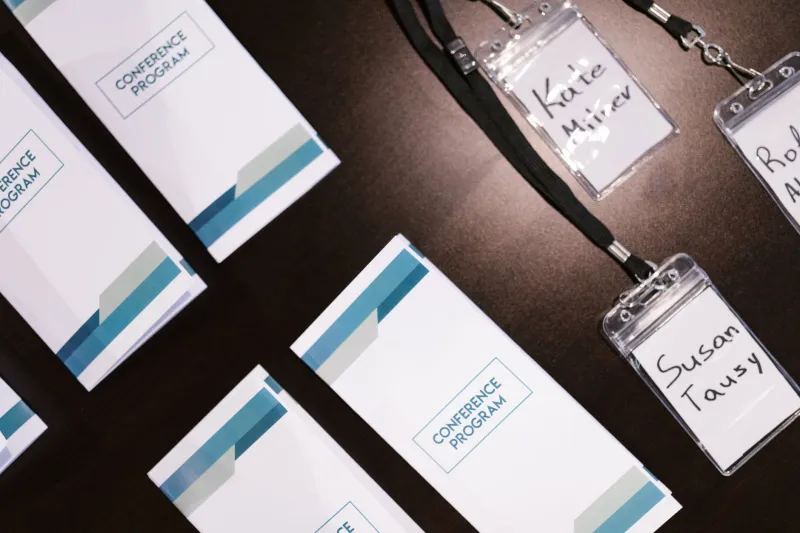
The HCI 2009 delegate bag is usually treated as ephemera, but its canvas, lanyard, notebook and sponsor inserts form a compact record of a field negotiating its professional identity. This retrospective reads the surviving bag as a primary source for conference economics, sponsorship and the changing self-image of UK UX.

Gaffer Tape and First Drafts: The HCI 2009 Demonstration Floor as Primary Source

Gaffer Tape and First Drafts: The HCI 2009 Demonstration Floor as Primary Source

Formal proceedings record what HCI 2009’s authors could finish; the demonstration room recorded what they could make work for twenty minutes. This retrospective argues that the conference’s prototypes, equipment lists and improvised exhibits are primary sources for UK interaction design, not supporting ephemera.

The Syllabus Remembers: HCI 2009 Papers That Still Teach UK UX in 2026

The Syllabus Remembers: HCI 2009 Papers That Still Teach UK UX in 2026

A new audit of UK HCI and UX module reading lists finds that a small group of HCI 2009 papers still do regular teaching work in 2026, while others have slipped out of the syllabus entirely. The pattern says less about citation counts than about what is teachable, portable, and still arguable in a seminar room.

Fingers Before Glass: Reassessing the 2009 Mobile Interaction Track

Fingers Before Glass: Reassessing the 2009 Mobile Interaction Track

The mobile interaction papers preserved from HCI 2009 record a discipline caught between keypads and capacitive glass. This retrospective examines what the track got right about touch, context and small-screen usability — and which of its confident predictions now read as period pieces.